Table of Contents
Let’s face it, disasters can disrupt access to clean water, toilets, bathing areas, and other basic hygiene needs. In such situations, hygiene supplies offer a practical way to help people maintain basic hygiene when normal facilities are not available. Not only do they provide basic personal care items, but they also help reduce hygiene risks and make it easier for people to maintain cleanliness during emergencies. For NGOs, aid groups, government bodies, and relief teams, getting the right hygiene supplies to the right people can be a key part of disaster response. However, poor planning can lead to supply gaps, wasted stock, damaged products, or items that do not meet the needs of the people receiving them.
While you can find a plethora of emergency hygiene kit suppliers, you would still need to plan carefully to ensure the supplies meet the needs of people affected by a disaster. Choosing the wrong products, ordering too few or too many kits, or overlooking storage needs can create problems during relief work. Nonetheless, by taking the time to plan the required supplies and keeping in mind a few important factors, NGOs can avoid common hygiene supply mistakes during disaster response.
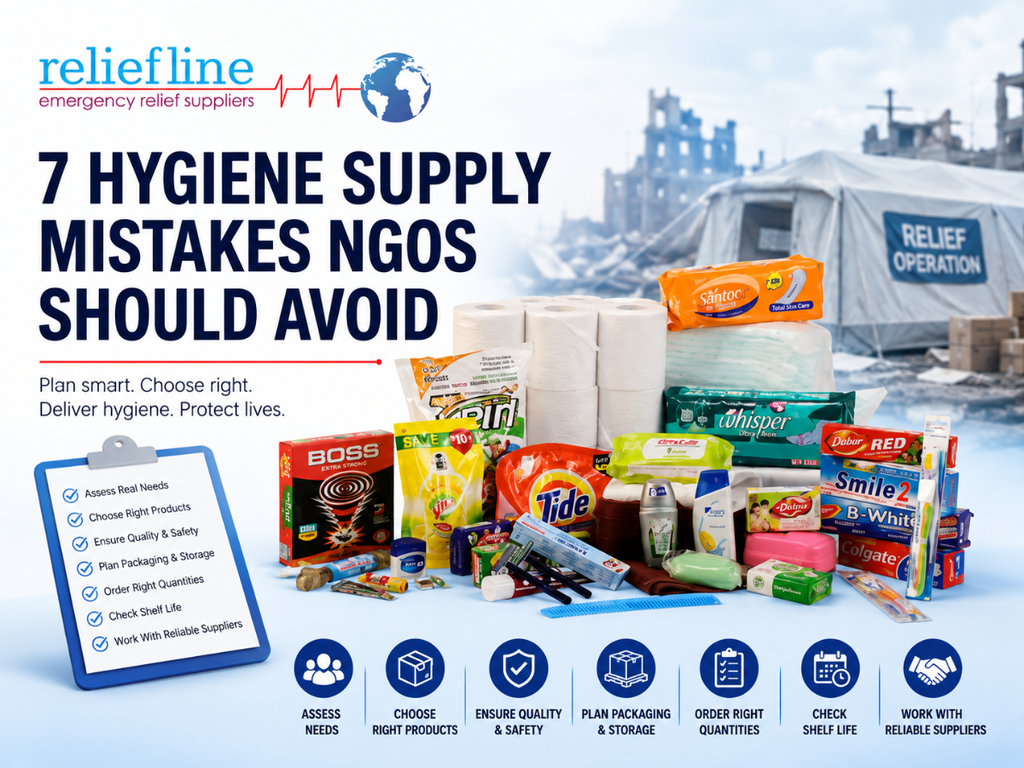
Here are seven common hygiene supply mistakes NGOs should avoid during disaster response.
Ordering Supplies Without Assessing Actual Needs
One of the most common mistakes NGOs make during disaster response is arranging hygiene supplies without first assessing the needs of the affected people. A product that is useful in one disaster situation may not be suitable for another.
Before arranging the required supplies, NGOs should assess the number of people affected and the hygiene needs created by the disaster. Factors such as age, gender, access to clean water, living conditions and the expected length of the relief period can affect the type and amount of supplies required.
Some key points to check include:
- Number of people: Estimate how many people need hygiene supplies.
- Type of users: Consider the needs of children, adults, older people, and other groups.
- Living conditions: Check whether people are staying in shelters, temporary camps, or other relief areas.
- Water access: Consider whether clean water is available for washing and other hygiene needs.
- Length of support: Work out how long the supplies may be needed during the relief period.
Taking the time to assess these needs can help NGOs provide suitable supplies and avoid shortages or excess stock.
Choosing the Wrong Hygiene Products
Not every hygiene product is suitable for every disaster situation. During disaster response, NGOs need to consider the conditions in which affected people will use the products.
People may be staying in temporary shelters, camps, or other locations where access to clean water, toilets, and other basic facilities is limited. The hygiene supplies provided should suit these conditions and be practical for people to use.
When choosing hygiene supplies, NGOs should consider:
- Access to water: Check whether people have enough clean water to use products that require washing.
- Living conditions: Consider where people are staying and the facilities available to them.
- Type of users: Choose products that suit the needs of children, adults, older people, and other groups.
- Ease of use: Make sure the products are simple and practical to use in the available conditions.
- Pack size: Choose packs that are easy for people to carry and store.
- Site conditions: Consider the weather and overall conditions in the affected area.
Choosing hygiene products based on the conditions faced by affected people can help NGOs provide supplies that are practical and useful during disaster response.
Ignoring Product Quality and Safety
During disaster response, hygiene supplies may be used by large numbers of people, often in difficult conditions. Providing poor-quality or unsafe products can create problems and leave people without items they can properly use.
NGOs should check the quality and safety of hygiene supplies before they are included in a relief program. This is important for products that come into direct contact with the skin, mouth, or other parts of the body.
Some key checks include:
- Review product details: Check the materials, ingredients, size and intended use.
- Check quality records: Review available test reports or other quality records.
- Review labels: Make sure product labels provide clear details and use instructions where needed.
- Check product safety: Make sure the products meet the required safety and quality rules.
- Check product condition: Inspect the supplies for damage or other issues before they are distributed.
Poor-quality products may break, leak, or fail to serve their intended purpose. Checking quality and safety can help NGOs avoid providing unsuitable hygiene supplies during disaster response.
Overlooking Packaging and Storage Needs
Hygiene supplies may be moved several times during disaster response. They may be transported to the affected area, unloaded, stored at a relief site and then carried to shelters or distribution points. Poor packaging or unsuitable storage can damage products before they reach the people who need them.
NGOs should consider how hygiene supplies will be protected throughout the relief effort. Products may be exposed to heat, moisture, dust, or rough handling depending on the conditions in the affected area.
The table below shows the main packaging and storage checks to make:
| Feature | What to Check |
| Packaging durability | Make sure the packs can handle normal transport and handling during relief work without tearing or breaking. |
| Secure seals | Check that liquid or moisture-sensitive products are properly sealed to reduce leaks or damage. |
| Product labels | Make sure products can be easily identified and include use instructions where needed. |
| Pack size | Check that individual packs are practical for people to carry and use. |
| Outer cartons | Make sure bulk cartons can protect the supplies while they are moved and stored. |
| Storage needs | Check whether the supplies need protection from heat, sunlight, moisture, or other site conditions. |
By checking the packaging and storage needs in advance, NGOs can help ensure that hygiene supplies remain protected and in usable condition until they reach the people who need them.
Waiting Too Long to Arrange Hygiene Supplies
It goes without saying that getting hygiene supplies to affected areas on time is important during disaster response. Delays can leave people without basic hygiene items when they need them and make it harder for relief teams to meet their needs.
NGOs should arrange the required hygiene supplies well in advance. This is especially important when a large number of people need support or when supplies must be transported to remote or badly affected areas.
Some important points to consider include:
- Supply needs: Check how many hygiene supplies are needed for the affected population.
- Time needed: Allow enough time to prepare, pack and move the supplies.
- Availability: Make sure enough supplies are available for the expected number of people.
- Transport: Consider the time needed to move supplies to the affected location.
- Changing needs: Keep in mind that more supplies may be needed if the disaster response continues.
- Backup supply: Have another way to get supplies if the main supply is delayed.
Arranging supplies early can help NGOs reduce delays and ensure hygiene items are available when relief teams need them.
Failing to Order Enough Supplies
During a disaster, the number of people needing support can change quickly. NGOs may need to provide hygiene supplies to more people than they first expected, which can lead to shortages during the relief effort.
The amount of hygiene supplies needed can also depend on how long people need support and how much of each product is used. NGOs should keep these factors in mind when ordering supplies for disaster response.
NGOs should consider:
- The number of people currently affected.
- The possibility that more people may need support.
- How long the relief effort may continue.
- How much of each product is needed per person.
- Whether extra supplies are available if needs increase.
- Whether more supplies can be arranged during the relief period.
Ordering enough supplies can help NGOs avoid shortages and continue providing basic hygiene items throughout the disaster response.
Choosing the Wrong Disaster Relief Product Supplier
Another common mistake NGOs make during disaster response is choosing a disaster relief product supplier without checking whether they can meet the needs of the relief effort. The wrong supplier may make it harder for NGOs to get suitable hygiene supplies when and where they are needed.
Before choosing a supplier, NGOs should check:
- Product range: Make sure the disaster relief product supplier offers the hygiene products needed for the relief effort.
- Product quality: Check whether the supplies meet the required quality and safety standards.
- Bulk supply: Make sure the supplier can provide the required quantity.
- Delivery time: Check whether the disaster relief product supplier can deliver the supplies within the required time.
- Past experience: Look for experience in supplying hygiene and disaster relief products.
- Order support: Make sure the supplier can answer questions and handle changes in the order.
By choosing a reliable disaster relief product supplier, NGOs can ensure that they receive suitable hygiene supplies when they need them.
Conclusion
The right hygiene supplies can make disaster relief efforts easier to manage and help people maintain basic hygiene in difficult conditions. However, poor planning can affect how well these supplies meet the needs of affected communities.
By avoiding common mistakes and planning each part of the supply process, NGOs can make sure hygiene supplies are suitable for the people they are meant to help.
Are you looking for reliable hygiene supplies for disaster relief or aid programs? Reliefline is India’s leading disaster relief product supplier & exporter and offers hygiene supplies for disaster relief.
Frequently Asked Questions
What hygiene supplies are needed during disaster response?
Common hygiene supplies include soap, toothbrushes, toothpaste, sanitary products, disinfectants, towels and hygiene kits. The exact items needed depend on the number of people, local needs, water access, and length of the relief program.
Why should NGOs assess hygiene needs before ordering supplies?
A needs check helps NGOs choose the right products and order the right quantity. It can reduce the risk of shortages, excess stock, and products that are not suitable for the people receiving them.
Why is packaging important for disaster relief hygiene supplies?
Hygiene supplies may be handled several times during transport and distribution. Proper packaging can help keep the supplies safe and in good condition during storage, transport, and distribution.
How can NGOs avoid delays when ordering hygiene supplies?
NGOs should check stock, lead time, shipping time, and delivery terms before placing an order. Placing bulk orders early can also give suppliers more time to prepare and ship the required quantity.
What should NGOs check before placing a bulk hygiene supply order?
NGOs should check product quality, pack size, shelf life where needed, packaging, storage needs, order quantity, supplier capacity, lead time, and delivery terms before placing a bulk order.
Why should NGOs not choose hygiene supplies based only on price?
Price is only one part of a large relief order. NGOs should also look at product quality, supply capacity, packaging, delivery time, quality records, and supplier support to make sure the order meets their needs.
How can NGOs choose the right quantity of hygiene supplies?
Start by checking the number of people who will receive the supplies, the amount needed per person, and how long the relief program will last. This gives a clearer idea of the total quantity needed.